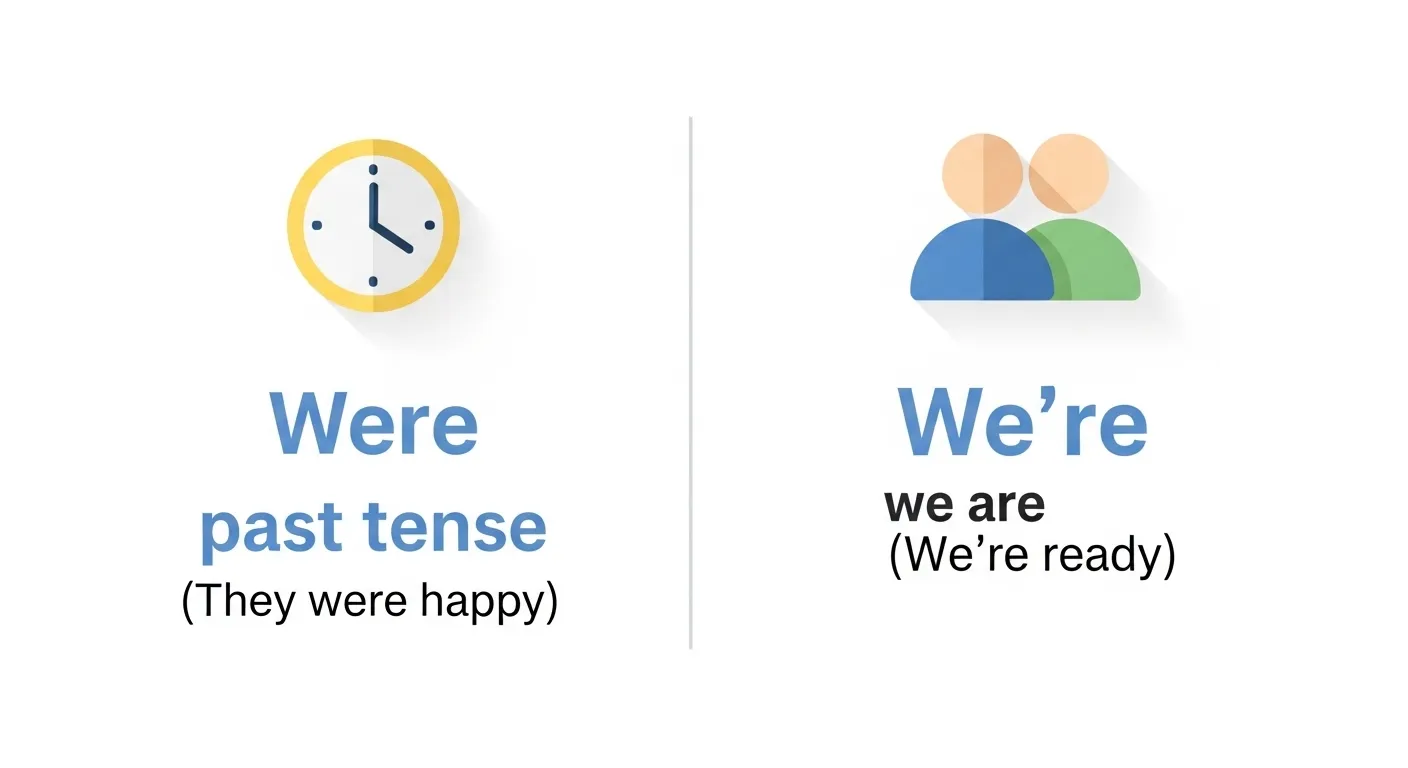
“Were” is a past tense verb, while “we’re” is short for “we are.” ✍️😊
“Were” or “we’re”? 🤔 These two words sound the same, but they have very different meanings. This is why many people get confused when writing emails, essays, or social media posts.
People often search “were or we’re” because they are unsure which one is correct. The problem is simple: both words are pronounced the same, but one is a verb, and the other is a short form (contraction). A small mistake can change the whole meaning of a sentence.
For example:
- “We’re going home” ✅
- “Were going home” ❌
This guide will make everything clear. You will learn the difference, when to use each word, and how to avoid common mistakes. By the end, you will feel confident using “were” and “we’re” correctly in any situation.
Were or We’re : Quick Answer
- Were → Past tense of “are”
- We’re → Short form of “we are”
Examples:
- They were happy yesterday 😊
- We’re ready to start now 🚀
👉 Simple rule:
If you can replace it with “we are,” use we’re.
The Origin of Were or We’re
Were
The word were comes from Old English “wǣron.” It is the past form of the verb “to be.”
We’re
We’re is a contraction of two words:
- We + are = we’re
Contractions became common to make speech and writing shorter and easier.
👉 Key idea:
- Were = past verb
- We’re = short form of “we are”
British English vs American English Spelling
There is no spelling difference between British and American English for these words.
| Word | British English 🇬🇧 | American English 🇺🇸 | Meaning |
| Were | Were | Were | Past verb |
| We’re | We’re | We’re | We are |
👉 These words are the same worldwide.
Which Spelling Should You Use?
Your choice depends on meaning, not region.
Use Were When:
- Talking about the past
- Referring to “you,” “they,” or plural subjects
Example:
- We were at school yesterday
Use We’re When:
- You mean “we are”
- Talking about the present
Example:
- We’re going to the market
👉 Quick tip:
Replace the word with “we are.” If it works, use we’re.
Common Mistakes with Were or We’re
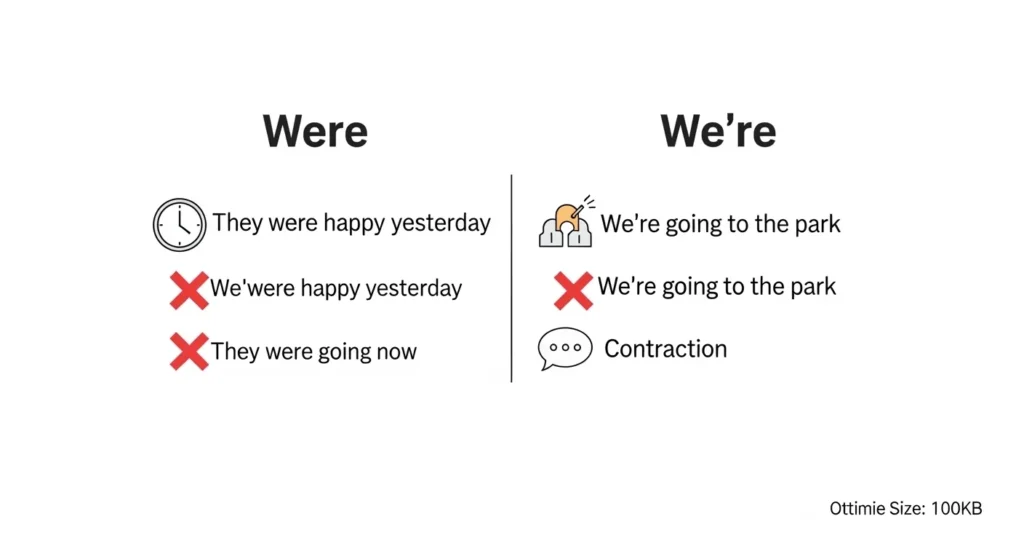
Here are common errors:
❌ “Were going to eat”
✔️ “We’re going to eat”
❌ “We’re happy yesterday”
✔️ “We were happy yesterday”
❌ Mixing tense and contraction
✔️ Keep past and present clear
❌ Ignoring apostrophe ( ’ )
✔️ “We’re” must have an apostrophe
👉 Small mistakes can change meaning.
Were or We’re in Everyday Examples
Emails
- “We were late for the meeting.”
- “We’re ready for your reply.”
News
- “They were affected by the storm.”
- “We’re seeing strong growth this year.”
Social Media
- “We’re so excited! 🎉”
- “Those were the best days 😍”
Formal Writing
- “Participants were selected carefully.”
- “We’re pleased to announce results.”
Were or We’re : Google Trends & Usage Data
Search trends show:
- Many users search this keyword due to confusion
- Both words are used globally 🌍
Usage Context:
- Were → More common in storytelling (past)
- We’re → More common in conversation (present)
Online Writing:
- Mistakes are frequent in social media
- Grammar tools often correct “were” vs “we’re”
👉 This is one of the most common grammar mistakes.
Comparison Table: Were vs We’re
| Aspect | Were | We’re |
| Type | Verb (past) | Contraction |
| Meaning | Past of “are” | We are |
| Time | Past | Present |
| Example | We were late | We’re late |
| Apostrophe | No | Yes ( ’ ) |
Detailed Comparison
1. Grammar
- Were → Past tense verb
- We’re → Short form
2. Usage
- Were → History, past events
- We’re → Present actions
3. Writing Style
- Were → Formal and neutral
- We’re → Casual and conversational
FAQs
1. What is the difference between were and we’re?
“Were” is past tense, while “we’re” means “we are.”
2. How do I know which one to use?
Replace with “we are.” If it fits, use “we’re.”
3. Is “we’re” formal?
It is less formal but acceptable in many contexts.
4. Can I use “were” for present tense?
No, “were” is only for past tense.
5. Why is this confusing?
They sound the same but have different meanings.
6. Is the apostrophe important?
Yes, it shows a contraction.
7. Which is more common?
Both are common but used in different contexts.
Conclusion
Understanding were or we’re is simple once you know the basic rule. These words may sound the same, but they have very different meanings. Were is used for the past, while we’re is a short form of “we are” used in the present.
The biggest mistake people make is mixing them up in writing. This usually happens because they focus on sound instead of meaning. But a quick check can fix this. Just replace the word with “we are.” If it fits, use we’re. If not, use were.
There is no difference between British and American English here, so you don’t need to worry about region. The key is grammar and correct usage.
Using these words correctly will make your writing clearer and more professional. Whether you are writing emails, essays, or social posts, this small detail can make a big difference.
In short:
👉 Were = past
👉 We’re = we are
Once you remember this, you will never confuse them again.
Read more about!
Pho or Ramen: Which Noodle Soup Is Better for You? 🍜🤔
Huggies vs Pampers for Babies 👶

I am James Whitmore. I love clear and honest English. I write to make hard words feel simple. My goal is to help readers write with confidence, without fear or confusion.