Have you ever written cancelation and wondered if it should actually be cancellation? You’re not alone. Many writers, students, business professionals, and English learners search for “cancellations or cancelation” because both spellings appear online, in documents, and on websites.
The confusion comes from the spelling of the verb cancel. When turning the verb into a noun, some people use cancelation with one “l,” while others use cancellation with two “l’s.” This leads many people to question which version is correct and if the answer changes between British and American English.
The good news is that one spelling is far more common and widely accepted than the other. Understanding the difference will help you write more accurately in emails, reports, business communications, and online content.
In this guide, you’ll learn the correct spelling, the history behind the word, regional differences, common mistakes, usage examples, and professional writing advice. By the end, you’ll know exactly when to use cancellation and why cancelation is rarely preferred.
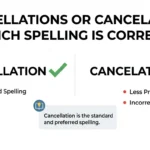
Cancellations or Cancelation : Quick Answer
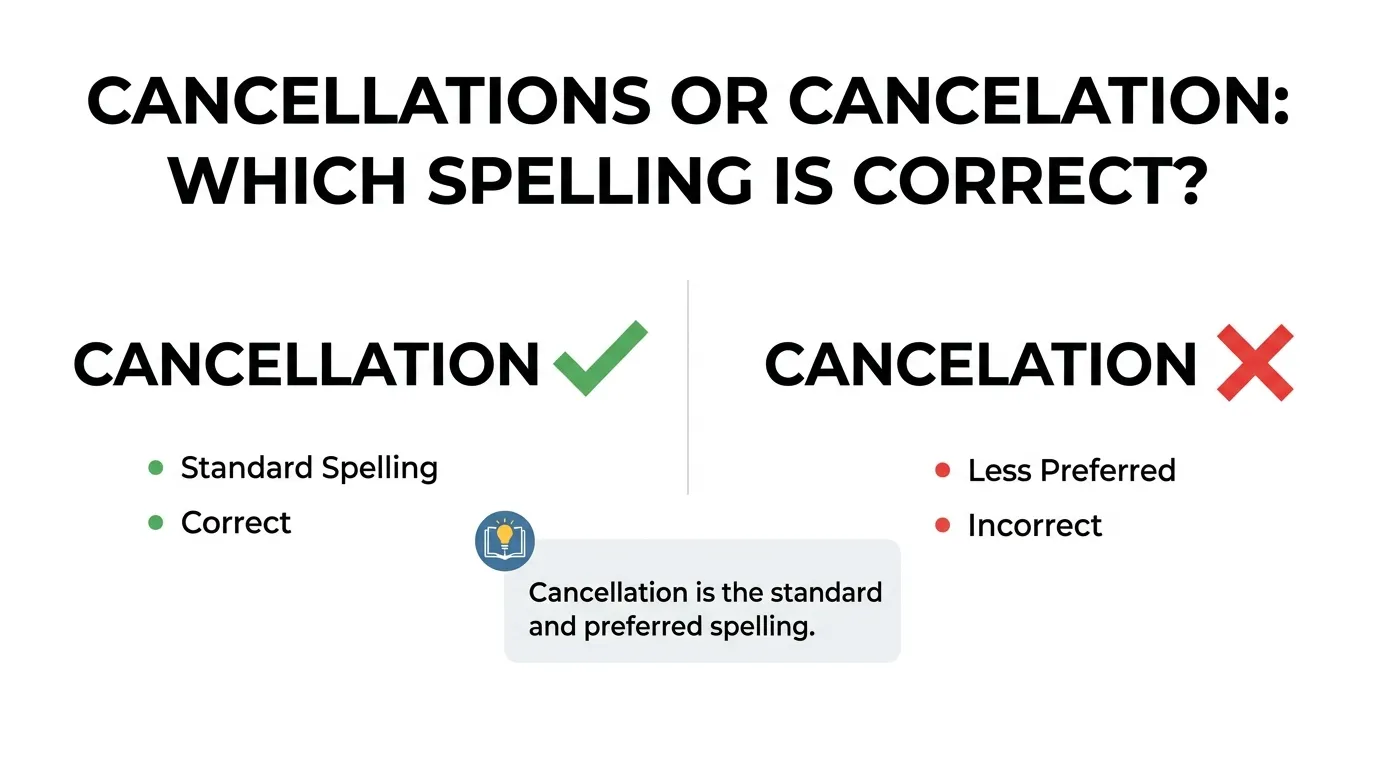
Cancellation is the standard and preferred spelling.
Cancelation is a less common alternative spelling, mainly seen in some American English sources.
Examples
✅ Correct: “The flight cancellation was announced this morning.”
✅ Acceptable but uncommon: “The flight cancelation was announced this morning.”
For most writing, use cancellation.
The Origin of Cancellations or Cancelation
The word comes from the verb cancel, which entered English from Latin through Old French.
As English developed, the noun form became cancellation, following the pattern of doubling the letter “l” before adding “-ation.”
Over time, some American dictionaries accepted cancelation as a variant spelling. However, cancellation remained the dominant form worldwide.
Today, most publishers, businesses, schools, and style guides prefer cancellation.
British English vs American English Spelling
British English strongly favors cancellation.
American English also primarily uses cancellation, although cancelation may occasionally appear.
Comparison Table
| British English | American English |
| Cancellation | Cancellation |
| Cancellation | Cancelation (less common) |
Examples
UK: “The event cancellation affected thousands.”
US: “The event cancellation affected thousands.”
In both regions, cancellation is the safer choice.
Which Spelling Should You Use?
For US Audiences
Use cancellation whenever possible.
For UK Audiences
Always use cancellation.
For Australia, Canada, and Commonwealth Countries
Use cancellation.
For Global Audiences
Choose cancellation because it is the most recognized spelling worldwide.
Common Mistakes with Cancellations or Cancelation
Many writers make these errors:
| Incorrect or Less Preferred | Preferred |
| Cancelation | Cancellation |
| Flight cancelation | Flight cancellation |
| Booking cancelation | Booking cancellation |
| Event cancelation | Event cancellation |
Incorrect
“The concert cancelation was unexpected.”
Preferred
“The concert cancellation was unexpected.”
Incorrect
“Several cancelations were reported.”
Preferred
“Several cancellations were reported.”
Cancellations or Cancelation in Everyday Examples
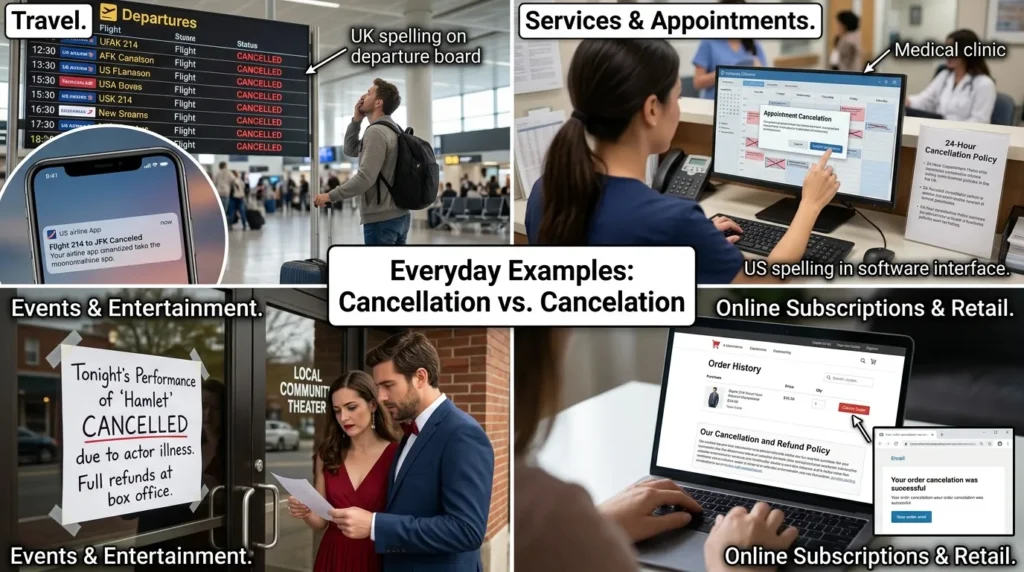
“We apologize for the cancellation of your appointment.”
News
“The airline announced several flight cancellations.”
Social Media
“More event cancellations due to bad weather.”
Formal Writing
“The cancellation policy is outlined in the agreement.”
Cancellations or Cancelation: Google Trends & Usage Data
Search data shows that cancellation is far more popular than cancelation.
Why People Search This Keyword
- They are unsure which spelling is correct.
- Spell-check tools sometimes show different suggestions.
- Both versions appear online.
- Writers want the professional spelling.
Popular Usage
| Term | Popularity |
| Cancellation | Very High |
| Cancellations | Very High |
| Cancelation | Low |
| Cancelations | Very Low |
Most searches for cancelation are people verifying the correct spelling.
Cancellation vs Cancelation Comparison Table
| Feature | Cancellation | Cancelation |
| Standard Spelling | Yes | No |
| Common Worldwide | Yes | Rare |
| British English | Preferred | Rare |
| American English | Preferred | Occasionally Used |
| Business Writing | Yes | Rare |
| Academic Writing | Yes | Rare |
FAQs
1. Is cancellation or cancelation correct?
Both exist, but cancellation is the preferred spelling.
2. Which spelling is more common?
Cancellation is much more common worldwide.
3. Is cancelation wrong?
Not completely, but it is considered a less common variant.
4. Do British and American English differ?
Both mainly use cancellation.
5. Should I use cancellation in professional writing?
Yes. It is the recommended spelling.
6. What is the plural form?
The plural form is cancellations.
7. Why do some people write cancelation?
Some American dictionaries recognize it as an alternative spelling.
Conclusion
When comparing cancellations or cancelation, the best choice is usually cancellation. It is the standard spelling used in British English, American English, business communication, academic writing, and most published content. Although cancelation exists as a recognized variant in some dictionaries, it appears much less often and may look incorrect to many readers.
For professional and global audiences, using cancellation helps ensure clarity and consistency. It is the spelling most people expect to see in emails, contracts, travel documents, news reports, and official communications.
The same rule applies to the plural form. Cancellations is the standard plural spelling and is widely accepted across all major English-speaking regions.
If you ever feel unsure, remember this simple guideline: choose cancellation and cancellations. These forms are the safest, most professional, and most widely recognized options for modern English writing.
Read more about!
Bitcoin or Ethereum: Which Is Better? 🚀💰
Fiber or Fibre: Which Spelling Is Correct?
Die or Dice: Which Word Is Correct?

Hye ! I am Henry P. Whitmore i am English writer known for my clear and practical approach to English grammar, word usage, and language clarity. I focuses on helping learners, writers, and professionals understand confusing English terms in a simple way. My work is especially useful for people who struggle with spelling differences, word meanings, and correct usage in everyday writing