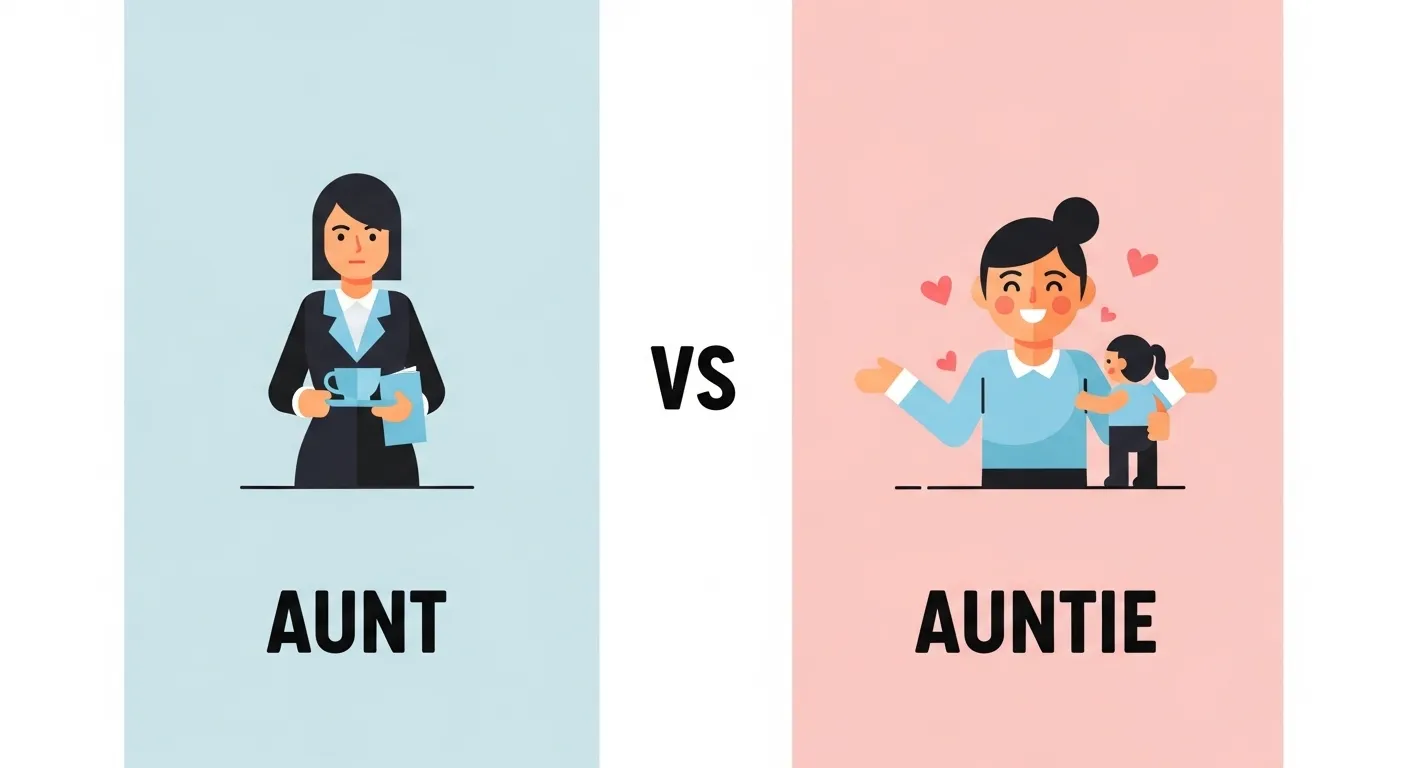
“Aunt is the standard formal term, while auntie is a more casual and affectionate version used in everyday speech 😊.
”Many people get confused between “aunt” and “auntie.” Both words refer to the same family member, but they are used in different ways. Some people hear “auntie” in daily life and think it is more correct. Others believe “aunt” is the only proper word. So which one should you use?
This confusion happens because English changes based on culture, tone, and region. In formal writing, people often use “aunt.” In casual speech, especially in families or certain cultures, “auntie” feels warmer and more friendly.
If you are writing an email, a school paper, or even a social media post, choosing the right word matters. This guide will help you understand the difference between “aunt” and “auntie,” when to use each, and which one fits your situation best.
Aunt or Auntie : Quick Answer
“Aunt” is the standard and formal word, while “auntie” is informal and used to show affection 😊.
Examples:
- Formal: “My aunt lives in London.”
- Informal: “I love you, auntie!”
The Origin of Aunt or Auntie
The word “aunt” comes from Old French ante, which came from Latin amita, meaning father’s sister. Over time, it became “aunt” in English.
“Auntie” is simply a variation of “aunt” with the “-ie” ending. This ending adds warmth and affection, similar to words like “mommy” or “daddy.”
There is no spelling mistake here both words are correct, but they serve different tones.
British English vs American English Spelling
Both “aunt” and “auntie” are used in British and American English. However, usage differs slightly.
Comparison Table
| Word | British English | American English | Usage Style |
| Aunt | Common | Common | Formal/Neutral |
| Auntie | Very common | Less common | Informal/Affectionate |
Which Spelling Should You Use?
Your choice depends on your audience:
- Use “aunt” if you are:
- Writing formally
- Speaking in professional settings
- Writing essays or official documents
- Use “auntie” if you are:
- Talking to family
- Writing casually
- Showing love or respect in a warm way
Global Tip:
In many Asian and African cultures, “auntie” is also used for older women as a sign of respect.
Common Mistakes with Aunt or Auntie
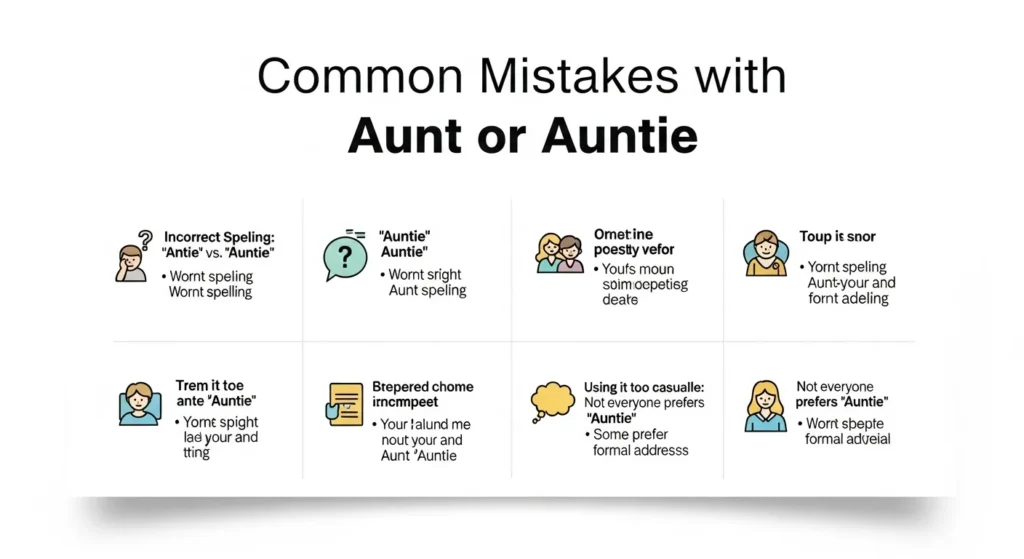
Here are common errors people make:
- Using “auntie” in formal writing
- Thinking “auntie” is incorrect
- Mixing tone in the same sentence
Correct Usage:
- Formal → “aunt”
- Casual → “auntie”
Aunt or Auntie in Everyday Examples
Email (Formal):
“I will visit my aunt next weekend.”
Social Media:
“Happy birthday, auntie! ❤️”
News Writing:
“The child was raised by her aunt.”
Casual Conversation:
“Auntie made delicious food today!”
Aunt or Auntie – Google Trends & Usage Data
Search trends show that both “aunt” and “auntie” are widely used, but in different contexts.
- “Aunt” is more common worldwide in formal searches.
- “Auntie” is popular in countries like the UK, India, and Pakistan for casual use.
Trend Insight:
- Formal writing → “aunt” dominates
- Social/cultural use → “auntie” increases
Comparison Table: Aunt vs Auntie
| Feature | Aunt | Auntie |
| Meaning | Father’s or mother’s sister | Same meaning |
| Tone | Formal/Neutral | Warm/Informal |
| Usage | Writing, official | Family, casual |
| Popularity | Global | Cultural/regional |
FAQs
1. Is “auntie” incorrect?
No, it is correct but informal.
2. Which is more professional?
“Aunt” is more professional.
3. Can I use “auntie” in writing?
Yes, but only in informal or personal writing.
4. Why do some cultures use “auntie” more?
It shows respect and closeness.
5. Is “aunt” used in both US and UK?
Yes, it is standard in both.
6. Can “auntie” be used for non-family members?
Yes, in many cultures it is used respectfully for older women.
7. Which should students use in exams?
Use “aunt” in exams and formal writing.
Conclusion
Both “aunt” and “auntie” are correct, but they are used in different situations. “Aunt” is the standard word and works best in formal writing, school work, and professional communication. It is clear, neutral, and widely accepted around the world.
“Auntie,” on the other hand, adds warmth and emotion. It is perfect for family conversations, social media, and cultures where respect and closeness are important. Many people use “auntie” not just for relatives but also for older women as a polite and friendly term.
The key is to match the word with your situation. If you want to sound formal and correct, choose “aunt.” If you want to sound friendly and affectionate, choose “auntie.”
Understanding this small difference helps improve your communication and makes your writing more natural and appropriate.
Read more about !
Fare vs. Fair: Key Difference Explained 🎡✍️
Handful or Handfull: Which Spelling Is Correct ?

I am James Whitmore. I love clear and honest English. I write to make hard words feel simple. My goal is to help readers write with confidence, without fear or confusion.