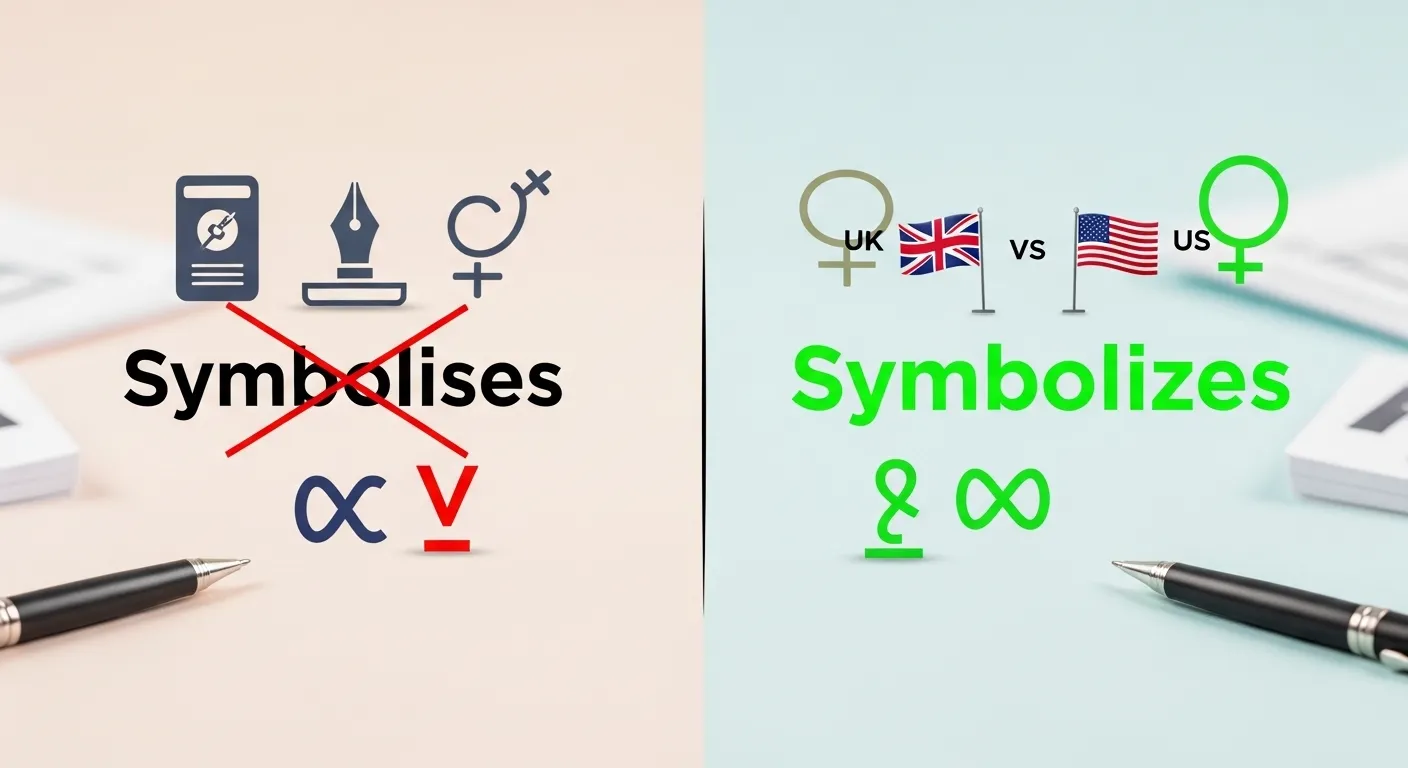
Symbolises or Symbolizes: Which Spelling Is Correct? 🤔✅ – “Symbolizes” is correct in American English; “Symbolises” is correct in British English.
Many people search for “symbolises or symbolizes” because they are unsure which spelling is correct. You may have seen symbolises in British articles and symbolizes in American blogs, and that’s where the confusion starts.
Both spellings look right. Both appear in professional writing. So which one should you use?
This confusion is very common among students, writers, bloggers, and non native English speakers. When writing emails, essays, content, choosing the wrong spelling can make your writing look inconsistent or incorrect especially for international audiences.
The good news is simple: both spellings are correct, but they are used in different types of English. The difference is not about meaning. It is about spelling rules based on region.
This article explains everything clearly. You’ll get a quick answer, the history of the word, British vs American spelling rules, real examples, common mistakes, Google usage trends, FAQs, and expert advice on which spelling to use and when.
Symbolises or Symbolizes ; Quick Answer
Both “symbolises” and “symbolizes” are correct.
The difference depends on British vs American English.
- Symbolises → British English
- Symbolizes → American English
Examples:
- 🇬🇧 The dove symbolises peace.
- 🇺🇸 The dove symbolizes peace.
✔ Same meaning
✔ Same pronunciation
✔ Different spelling systems
The Origin of Symbolises or Symbolizes
The word symbolize comes from ancient languages.
Word History
- From Greek: symbolon (a sign or mark)
- Passed into Latin: symbolum
- Entered French and later English
- Became symbolize / symbolise in modern English
Why two spellings exist
The spelling difference comes from standardization, not meaning.
- American English simplified spelling in the 1800s
- British English kept traditional spellings
This is why American English prefers ize, while British English often uses ise.
British English vs American English Spelling
This is a classic ise vs ize spelling difference.
Spelling Rules
| English Type | Preferred Spelling |
| British English | Symbolises |
| American English | Symbolizes |
| Canadian English | Symbolizes / Symbolises |
| Australian English | Symbolises |
Examples
- 🇬🇧 The crown symbolises authority.
- 🇺🇸 The crown symbolizes authority.
Comparison Table
| Feature | Symbolises | Symbolizes |
| English Variant | British | American |
| Meaning | Same | Same |
| Pronunciation | Same | Same |
| Formal Writing | UK/Commonwealth | USA |
Which Spelling Should You Use?
The best spelling depends on your audience.
Use Symbolizes if:
- Your audience is in the United States
- You follow AP style or US standards
Use Symbolises if:
- Your audience is in the UK
- You write for Australia, New Zealand, or Commonwealth countries
- You follow British academic standards
For Global Audiences
- Choose one spelling
- Stay consistent
- American spelling (symbolizes) is more common online
👉 Professional tip:
Pick one spelling and use it everywhere in the same document.
Common Mistakes with Symbolises or Symbolizes
❌ Common Errors
- Mixing symbolises and symbolizes in one article
- Thinking one spelling is wrong
- Changing spelling randomly
- Using the wrong spelling for the target audience
✅ Correct Usage
- Be consistent
- Match your audience
- Follow style guides
Example:
- ❌ The flag symbolises freedom and symbolizes unity.
- ✅ The flag symbolizes freedom and symbolizes unity.
Symbolises or Symbolizes in Everyday Examples
Emails
- 🇬🇧 This gift symbolises our appreciation.
- 🇺🇸 This gift symbolizes our appreciation.
News
- 🇬🇧 The monument symbolises national pride.
- 🇺🇸 The monument symbolizes national pride.
Social Media
- 🇬🇧 This logo symbolises growth 🌱
- 🇺🇸 This logo symbolizes growth 🌱
Formal Writing
- 🇬🇧 The color white symbolises purity.
- 🇺🇸 The color white symbolizes purity.
Symbolises or Symbolizes ; Google Trends & Usage Data
Search trends show strong regional differences.
Usage by Country
| Country | Popular Spelling |
| United States | Symbolizes |
| United Kingdom | Symbolises |
| Australia | Symbolises |
| Canada | Both |
| Global Search | Symbolizes (slightly higher) |
Search Intent
Most people search “symbolises or symbolizes” to:
- Check which spelling is correct
- Avoid grammar mistakes
- Write professionally
Comparison Table: Symbolises vs Symbolizes
| Feature | Symbolises | Symbolizes |
| Correct spelling | ✅ Yes | ✅ Yes |
| British English | ✅ Yes | ❌ No |
| American English | ❌ No | ✅ Yes |
| Dictionary approved | ✅ Yes | ✅ Yes |
| Meaning difference | ❌ No | ❌ No |
FAQs
1. Are symbolises and symbolizes the same?
Yes. They have the same meaning.
2. Is symbolises British English?
Yes. Symbolises is British spelling.
3. Is symbolizes American English?
Yes. Symbolizes is American spelling.
4. Can I use both in one article?
No. Choose one and stay consistent.
6. Are both spellings correct in dictionaries?
Yes. Major dictionaries accept both.
7. Which spelling should students use?
Use the spelling required by your school or country.
Conclusion
The confusion between symbolises or symbolizes is not about meaning it’s about spelling rules. Both spellings are correct, accepted, and widely used. The only difference is region.
If you write for a British or Commonwealth audience, use symbolises. If your audience is American or global, symbolizes is often the better choice. What matters most is consistency. Mixing both spellings in the same content can confuse readers and reduce credibility.
For bloggers, and professionals, understanding this difference helps you write with confidence. Once you know your audience, the decision becomes easy.
Remember:
Same word. Same meaning. Different spelling systems.
Read more about ;
💬 Conversate or Converse: Which Word Is Correct in English? ✨

Hye ! I am Henry P. Whitmore i am English writer known for my clear and practical approach to English grammar, word usage, and language clarity. I focuses on helping learners, writers, and professionals understand confusing English terms in a simple way. My work is especially useful for people who struggle with spelling differences, word meanings, and correct usage in everyday writing