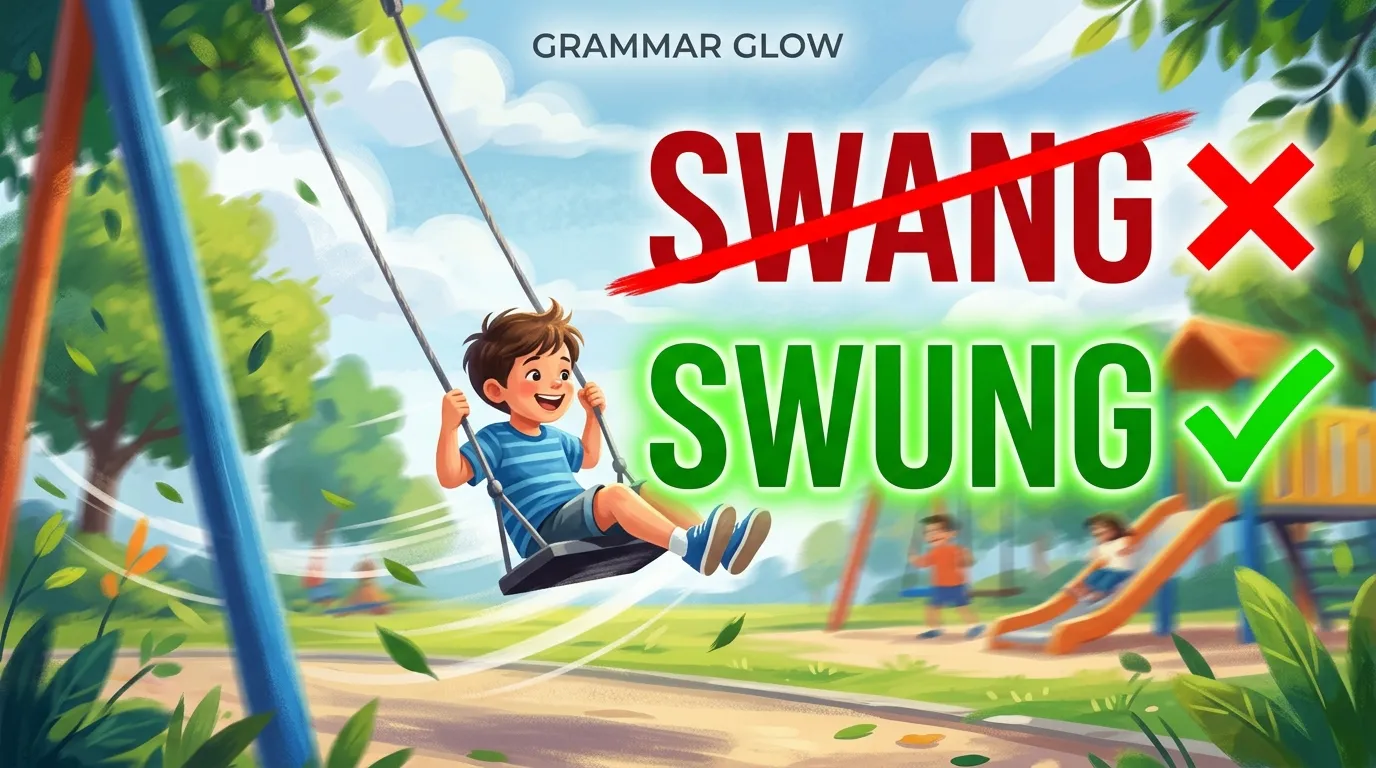
Swang or Swung? 🤔 – “Swung” is the correct past tense of “swing,” while “Swang” is considered nonstandard. ✅
Many people search for “swang or swung” because they are unsure which is correct. You might have heard swang in casual speech, music lyrics, or social media, and wondered if it is a real word or just slang. Meanwhile, swung is the standard past tense of swing, and confusion arises because both are pronounced similarly.
The word is used in everyday conversation, writing, and even in musical or cultural contexts to describe motion, action, or rhythm. Choosing the wrong spelling can make your writing look unprofessional or even confusing, especially in formal writing or academic content.
Understanding the correct usage is essential for clarity and professionalism. This article will provide a quick answer, word origin, British vs American spelling rules, common mistakes, everyday examples, Google trends, FAQs, and expert adviceso you never have to guess between swang and swung again.
Swang or Swung – Quick Answer
- Swung → Correct past tense of swing in standard English
- Swang → Informal, nonstandard, or slang form
Examples:
- ✅ She swung the bat with all her strength.
- ✅ He swung by the store on his way home.
- ❌ She swang the bat with all her strength.
👉 Always use “swung” in formal writing.
Tip: Swang is sometimes used in music or cultural contexts, particularly in hip-hop lyrics, but it is not standard English.
The Origin of Swang or Swung
Word History
- The verb swing originates from Old English “swingan”, meaning to beat, strike, or move back and forth.
- Swung is the regular past tense form recognized in dictionaries.
- Swang appears as a dialectal, historical, or cultural variant, mostly in African American Vernacular English (AAVE) or in song lyrics.
Why “swang” appears
- Phonetic spelling in music and casual speech led to the use of swang.
- Popularized in hip-hop and social media, where informal spelling is often embraced for style and rhythm.
❗ Important:
Swang is not accepted in standard English grammar and should not be used in formal or academic writing.
British English vs American English Spelling
The correct standard form, swung, is the same in both British and American English.
Examples:
- 🇬🇧 He swung the door open and walked inside.
- 🇺🇸 He swung the door open and walked inside.
Comparison Table
| English Variant | Correct Spelling |
| British English | Swung |
| American English | Swung |
| Australian English | Swung |
| Canadian English | Swung |
✔ Single correct spelling
✔ No regional variation in standard English
✔ Universally recognized in dictionaries
Which Spelling Should You Use?
Use Swung if:
- You are writing formal content, essays, articles, or emails
- You are describing the past tense of swing in standard English
- You want your writing to appear professional and grammatically correct
When “Swang” appears:
- Mostly in informal speech, music lyrics, and social media
- Often used for style, rhythm, or cultural expression
- Not appropriate in academic or formal writing
Professional advice:
Always use swung in professional and academic contexts. Use swang only when quoting lyrics or informal dialogue for stylistic purposes.
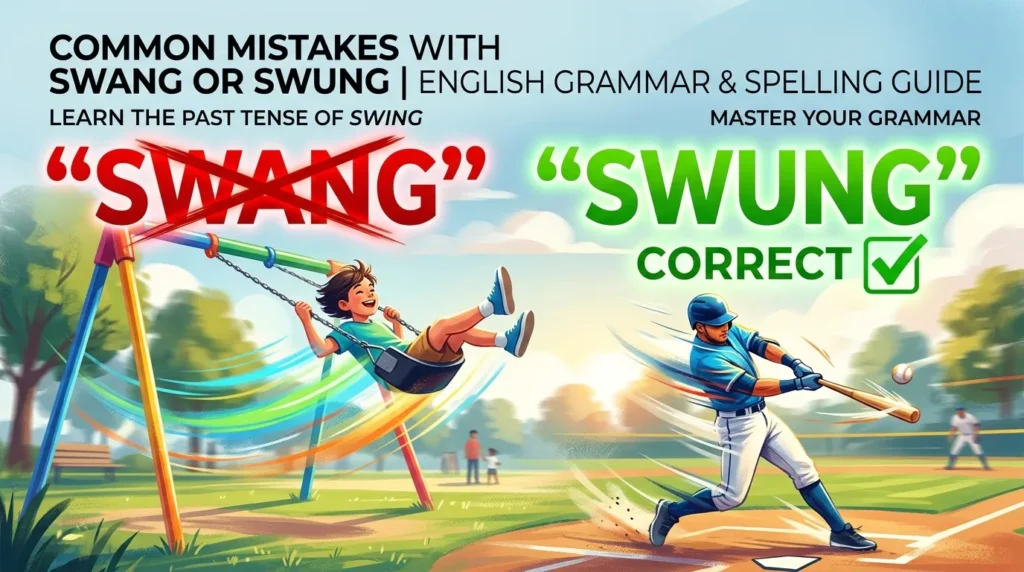
Common Mistakes with Swang or Swung
❌ Common Errors
- Using swang instead of swung in standard sentences
- Confusing informal or cultural spelling with correct grammar
- Believing both are interchangeable in all contexts
✅ Corrections
- Replace swang → swung for past tense usage
- Reserve swang for quotes, music lyrics, or informal contexts
Examples:
- ❌ She swang on the swing all afternoon.
- ✅ She swung on the swing all afternoon.
- ❌ He swang by the store yesterday.
- ✅ He swung by the store yesterday.
Swang or Swung in Everyday Examples
Emails
- ✅ I swung by your office to drop off the documents.
- ❌ I swang by your office to drop off the documents.
News
- ✅ The gymnast swung across the bars gracefully.
- ❌ The gymnast swang across the bars gracefully.
Social Media
- ✅ He swang through the city in the new music video. (informal/lyrical)
- ✅ She swung by the café this morning. (standard)
- ❌ He swang through the city in the new music video. (formal writing)
Formal Writing
- ✅ The pendulum swung back and forth steadily.
- ❌ The pendulum swang back and forth steadily.
Swang or Swung – Google Trends & Usage Data
Search trends show different usage based on context:
Search Popularity
- “Swung” → High global search volume, used in standard English writing and education
- “Swang” → Lower search volume, often linked to music, social media, and pop culture
Usage by Country
| Country | More Common Form |
| USA | Swung (formal), Swang (informal/pop culture) |
| UK | Swung |
| Australia | Swung |
| Canada | Swung |
| Swang usage | Mostly in music/hip-hop contexts |
📌 Insight:
Use swung for professional, academic, or educational content, and swang only for cultural or lyrical references.
Comparison Table: Swang vs Swung
| Feature | Swung | Swang |
| Correct past tense | ✅ Yes | ❌ No |
| Dictionary listed | ✅ Yes | ❌ No |
| British English | ✅ Yes | ❌ No |
| American English | ✅ Yes | ❌ No |
| Professional writing | ✅ Yes | ❌ No |
| Informal/lyrical use | ❌ | ✅ Pop culture, music |
| safe | ✅ Yes | ❌ Only in specific cultural searches |
FAQs
1. Is “swang” a real word?
It is used in informal speech or music, but not standard English.
2. Is “swung” British or American English?
It is correct and standard in both British and American English.
3. Can swang be used in formal writing?
No. Only use it in quotes, lyrics, or informal dialogue.
4. What is the past tense of swing?
Swung is the correct past tense.
5. Why do people use swang?
It is often used for rhythm, style, or cultural expression, especially in music.
6. How can I remember the correct spelling?
Think: Swing → Swung; Swang is slang/pop culture only.
7. Can both forms appear in social media posts?
Yes, swang is common in informal or musical contexts, while swung is used for standard grammar.
Conclusion
The confusion between swang or swung is common, but the rule is simple:
- Swung = correct past tense of swing in standard English
- Swang = informal, slang, or lyrical form
Use swung in professional, academic, or formal writing to maintain clarity, correctness, and credibility. Reserve swang only for music lyrics, pop culture references, or informal dialogue.
By remembering this simple rule, you can write confidently and avoid mistakes.
👉 Swung = correct past tense; Swang = stylistic/informal usage. Stick to this, and your writing will always look professional and polished.
Read more about!
Volcanoes or Volcanos: Which Plural Is Correct? 🌋🤔✅

I am an English author who loves words and their meaning. Writing is not just my work, it is my passion. I write to make English simple, clear, and easy to understand for everyone. My focus is on real language, real mistakes, and real learning. Every article I write comes from research, experience, and a love for honest writing. My goal is simple: help readers feel confident with English.