
Many people search for “parley or parlay” because the two words look almost identical but are used in very different ways.
You might see parley in history books or news articles about negotiations, while parlay often appears in sports betting or business writing.
This overlap creates real confusion especially for non-native English speakers, students, writers, and even professionals.
The problem is simple: both words come from the same origin, both are correct English words, and both are still used today.
But their meanings, contexts, and usage rules are not the same. Using the wrong one can change the meaning of your sentence or make it sound unprofessional.
This article solves that confusion clearly and completely. You’ll get a quick answer, real-world examples, origin history, British vs American usage, common mistakes, and practical advice on which spelling to use.
By the end, you’ll know exactly when to use parley and when to use parlay without guessing.
Read more about Florence or Tides: Which One Are You Looking For?
Parley or Parlay ; Quick Answer
Parley means a discussion or negotiation, usually between opposing sides.
Parlay means to turn something into something bigger, often used in betting or business.
Examples:
- The two sides agreed to parley before the battle.
- He parlayed a small investment into a large business.
👉 Short rule:
- Talking or negotiating → Parley
- Turning gains into bigger gains → Parlay
The Origin of Parley or Parlay
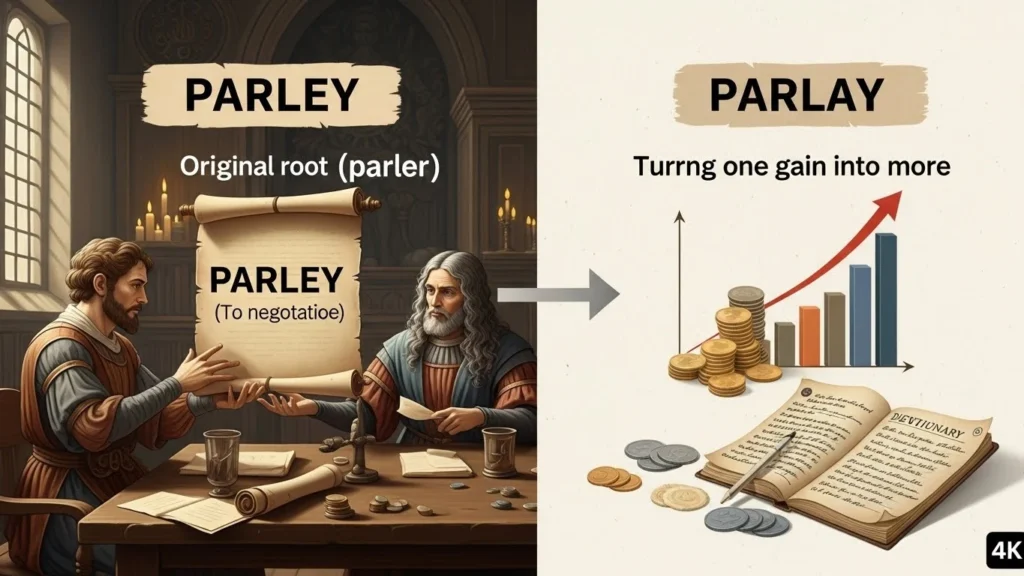
Both parley and parlay come from the French word parler, which means to speak. In Middle English, parley entered the language first and was used to describe formal talks, especially during war or conflict.
Over time, English speakers especially in America began using a spelling variation: parlay. This new form slowly developed a different meaning, moving away from “talk” and toward the idea of leveraging or multiplying something, particularly in gambling.
Why spelling differences exist:
- English borrowed the word from French
- Spelling was not standardized for centuries
- American English evolved new meanings and uses
- Gambling and business culture shaped “parlay”
Today:
- Parley keeps the original “talk” meaning
- Parlay carries the modern “expand or multiply” meaning
British English vs American English Spelling
British and American English handle these words differently, but meaning matters more than location.
Key differences:
- British English prefers parley for negotiations
- American English uses parlay mainly in betting and business
Comparison Table
| Aspect | Parley | Parlay |
| Core Meaning | Discussion, negotiation | Turn into something bigger |
| Origin Use | Military, diplomacy | Gambling, business |
| British English | Common | Rare |
| American English | Formal contexts | Very common |
| Sports Betting | ❌ No | ✅ Yes |
Which Spelling Should You Use?
Your choice depends on context and audience, not just country.
Use Parley if:
- You mean a discussion or negotiation
- You are writing history, politics, or diplomacy
- Your audience is UK or global academic readers
Example:
The leaders met to parley over peace terms.
Use Parlay if:
- You mean turning one thing into more
- You are writing about betting, money, or growth
- Your audience is American or global business readers
Example:
She parlayed her skills into a successful career.
👉 Tip: If “negotiate” fits, use parley. If “leverage” fits, use parlay.
Common Mistakes with Parley or Parlay
Here are the most frequent errors people make:
❌ Mistake 1: Using parlay for negotiations
- ❌ They agreed to parlay with the enemy.
- ✅ They agreed to parley with the enemy.
❌ Mistake 2: Using parley in betting
- ❌ He placed a parley bet.
- ✅ He placed a parlay bet.
They are not interchangeable spellings. They are different words with different meanings.
Parley or Parlay in Everyday Examples
Emails
- Let’s parley before making a final decision.
- He parlayed his internship into a full-time job.
News
- Officials agreed to parley amid rising tensions.
- The athlete parlayed fame into business success.
Social Media
- Time to parley, not fight.
- Turned one win into five classic parlay.
Formal Writing
- A formal parley was requested by both sides.
- The company parlayed early success into global growth.
Parley or Parlay ; Google Trends & Usage Data
Search behavior shows clear patterns:
- Parlay is far more popular in the United States, mainly due to sports betting.
- Parley appears more in UK searches, history content, and academic writing.
- Global users often search both together due to confusion.
Usage by Context:
- Sports betting → Parlay
- Business growth → Parlay
- Diplomacy → Parley
- Military history → Parley
This explains why “parley or parlay” is such a common search query.
Parley vs Parlay ; Comparison Table
| Feature | Parley | Parlay |
| Part of Speech | Noun / Verb | Verb / Noun |
| Meaning | Talk, negotiate | Multiply, leverage |
| Common Context | Politics, war | Betting, business |
| US Usage | Limited | Very common |
| UK Usage | Common | Limited |
FAQs: Parley or Parlay
1. Are parley and parlay the same word?
No. They share an origin but have different meanings today.
2. Is parlay only used in gambling?
Mostly, but it’s also used in business and career growth.
3. Can parley be used as a verb?
Yes. “They decided to parley.”
4. Which spelling is older?
Parley is older and closer to the French original.
5. Is parlay American English?
Yes, it is mainly an American development.
6. Can I use parlay in formal writing?
Yes, especially in business or finance contexts.
7. Which one should I use globally?
Use parley for talks, parlay for growth or betting.
Conclusion
The confusion between parley or parlay comes from their shared history and similar spelling, but their meanings today are clearly different.
Parley is about communication formal talks, negotiations, and discussions, often in serious or diplomatic situations.
Parlay, on the other hand, is about expansion turning one success, win, or resource into something greater, especially in betting and business.
Choosing the right word depends on meaning first, audience second.
If your sentence involves discussion or negotiation, parley is always correct. If it involves growth, leverage, or combined bets, parlay is the right choice.
By understanding context, origin, and modern usage, you can avoid common mistakes and write with confidence. Once you know the difference, this is a confusion you’ll never face again.

Hye ! I am Henry P. Whitmore i am English writer known for my clear and practical approach to English grammar, word usage, and language clarity. I focuses on helping learners, writers, and professionals understand confusing English terms in a simple way. My work is especially useful for people who struggle with spelling differences, word meanings, and correct usage in everyday writing