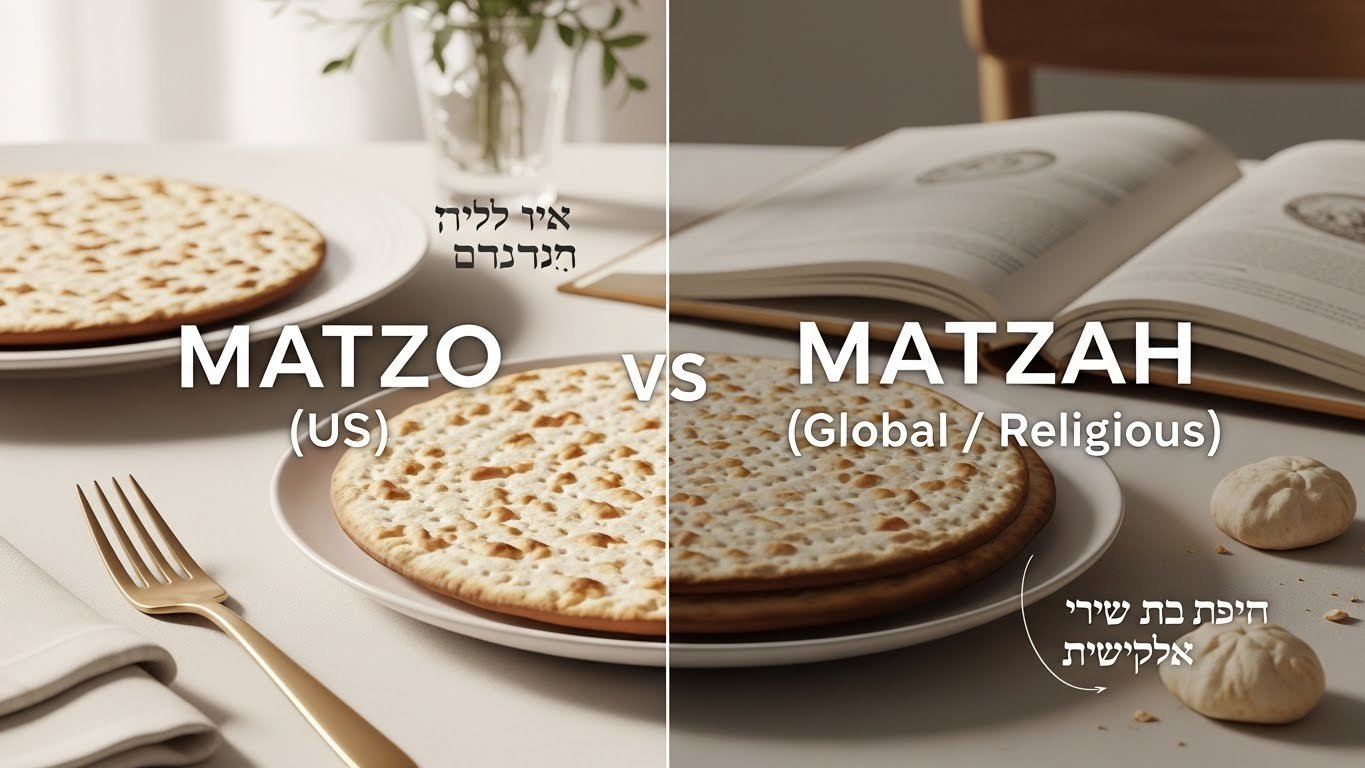
Many people search for “matzo or matzah” because they see both spellings used for the same Jewish unleavened bread and wonder which one is correct.
You might notice matzo on food packages in the United States, while matzah appears in religious texts, cookbooks, or British writing.
This difference can feel confusing, especially for readers who are not familiar with Hebrew words or Jewish traditions.
The confusion exists because both spellings are correct, but they come from different transliteration choices.
Hebrew words do not use the English alphabet, so when they are written in English, multiple spellings often appear.
Over time, regional preferences developed, which is why you now see matzo, matzah, and even matza used side by side.
This article clears up that confusion step by step. You’ll get a quick answer, learn the origin of both spellings, see British vs American usage, avoid common mistakes, and understand which spelling to use for your audience.
By the end, you’ll confidently know when to use matzo and when to use matzah.
Matzo or Matzah ; Quick Answer
Matzo and matzah refer to the same food: traditional Jewish unleavened bread eaten during Passover.
- Matzo is the American English spelling.
- Matzah is closer to the Hebrew pronunciation and is common in religious, British, and international contexts.
Examples:
- We bought a box of matzo for Passover dinner.
- The Torah mentions matzah as a symbol of haste and freedom.
👉 Short rule:
Meaning is the same. Choose the spelling based on audience and context.
Read more about Florence or Tides: Which One Are You Looking For?
The Origin of Matzo or Matzah
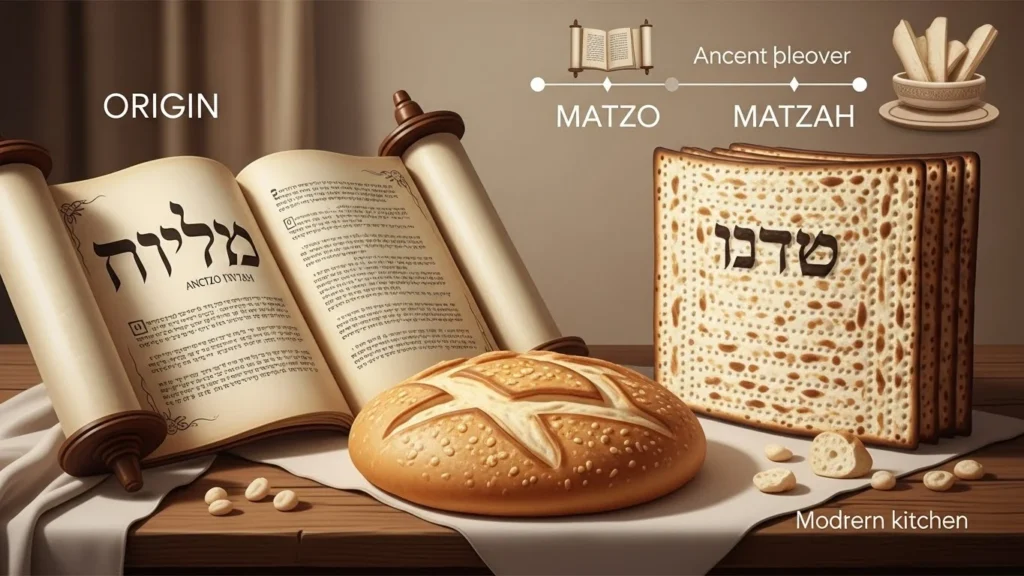
The word comes from the Hebrew word מַצָּה (matzah), which means unleavened bread. According to Jewish tradition, matzah represents the bread eaten by the Israelites when they left Egypt in a hurry and did not have time for dough to rise.
Why spelling differences exist
Hebrew uses a different alphabet, so English spellings are transliterations, not direct translations. Different communities chose different ways to represent Hebrew sounds in English letters.
- The “ah” ending reflects the original Hebrew sound → matzah
- The “o” ending reflects simplified American pronunciation → matzo
Over time:
- Jewish religious texts kept matzah
- American food brands adopted matzo
- British and academic writing stayed closer to matzah
This is why both spellings exist today and remain correct.
British English vs American English Spelling
Unlike many spelling debates, this one is not about right vs wrong, but about regional and cultural preference.
Key differences:
- American English favors matzo
- British English and Commonwealth English favor matzah
Comparison Table
| Aspect | Matzo | Matzah |
| Meaning | Unleavened bread | Unleavened bread |
| Origin | Hebrew | Hebrew |
| American English | Very common | Less common |
| British English | Rare | Common |
| Religious Texts | Sometimes | Very common |
| Food Packaging (US) | Common | Less common |
Which Spelling Should You Use?
The best spelling depends on who you are writing for.
Use Matzo if:
- Your audience is American
- You are writing food blogs, recipes, or packaging
- You want a casual or everyday tone
Example:
This soup tastes great with crushed matzo.
Use Matzah if:
- Your audience is UK, international, or academic
- You are writing religious or cultural content
- You want to stay close to Hebrew tradition
Example:
Matzah symbolizes freedom during Passover.
Global advice:
If unsure, matzah is more universally understood in formal contexts.
Common Mistakes with Matzo or Matzah
Here are the most frequent errors people make:
❌ Mistake 1: Thinking one spelling is wrong
Both matzo and matzah are correct.
❌ Mistake 2: Mixing spellings in one article
Choose one spelling and stay consistent.
❌ Mistake 3: Using incorrect plural forms
- Correct: matzos, matzahs
- Informal but common: matzot (Hebrew plural, formal contexts)
❌ Mistake 4: Confusing with pronunciation
Different spellings do not change the meaning.
Matzo or Matzah in Everyday Examples
Emails
- Please bring matzo for the holiday dinner.
- We will serve matzah at the ceremony.
News
- Bakeries report high demand for matzo before Passover.
- The article explains the role of matzah in Jewish history.
Social Media
- Stocked up on matzo snacks for the week.
- Learning why matzah matters during Passover.
Formal Writing
- Matzah is a central symbol in Jewish tradition.
- The dietary laws surrounding matzo are strictly followed.
Matzo or Matzah ; Google Trends & Usage Data
Search data shows clear regional patterns:
- Matzo is searched more in the United States
- Matzah is searched more in the UK, Israel, and academic contexts
- Around Passover, searches for both spellings increase sharply
Usage by context:
- Grocery and recipes → Matzo
- Religion and education → Matzah
- Global audiences → Matzah
This explains why people often search “matzo or matzah” to understand the difference.
Matzo vs Matzah ; Comparison Table
| Feature | Matzo | Matzah |
| Meaning | Unleavened bread | Unleavened bread |
| Spelling Type | American preference | Hebrew-based |
| Cultural Use | Everyday food | Religious symbolism |
| Common Regions | USA | UK, Israel, global |
| Formal Writing | Less common | Preferred |
FAQs: Matzo or Matzah
1. Are matzo and matzah the same thing?
Yes. They refer to the same unleavened bread.
2. Which spelling is more correct?
Both are correct. Matzah is closer to Hebrew.
3. Is matzo American English?
Yes, matzo is the common American spelling.
4. Is matzah used in the Bible?
Yes. Religious texts usually use matzah.
5. Can I use both spellings in one article?
It’s better to choose one and stay consistent.
7. Does pronunciation change?
No. Pronunciation is similar for both spellings.
Conclusion
The debate over matzo or matzah is not about correctness, but about context, audience, and tradition. Both words come from the same Hebrew origin and describe the same unleavened bread eaten during Passover.
Over time, English usage split into two main spellings. Matzo became popular in American everyday language and food packaging, while matzah stayed closer to religious, academic, and international usage.
When choosing which one to use, focus on your readers. If you are writing for an American food focused audience, matzo feels natural.
If your content is religious, historical, or global, matzah is usually the better choice. Most importantly, stay consistent within your writing.
Once you understand this difference, the confusion disappears. You can now use matzo or matzah with confidence and clarity in any situation.

Hye ! I am Henry P. Whitmore i am English writer known for my clear and practical approach to English grammar, word usage, and language clarity. I focuses on helping learners, writers, and professionals understand confusing English terms in a simple way. My work is especially useful for people who struggle with spelling differences, word meanings, and correct usage in everyday writing