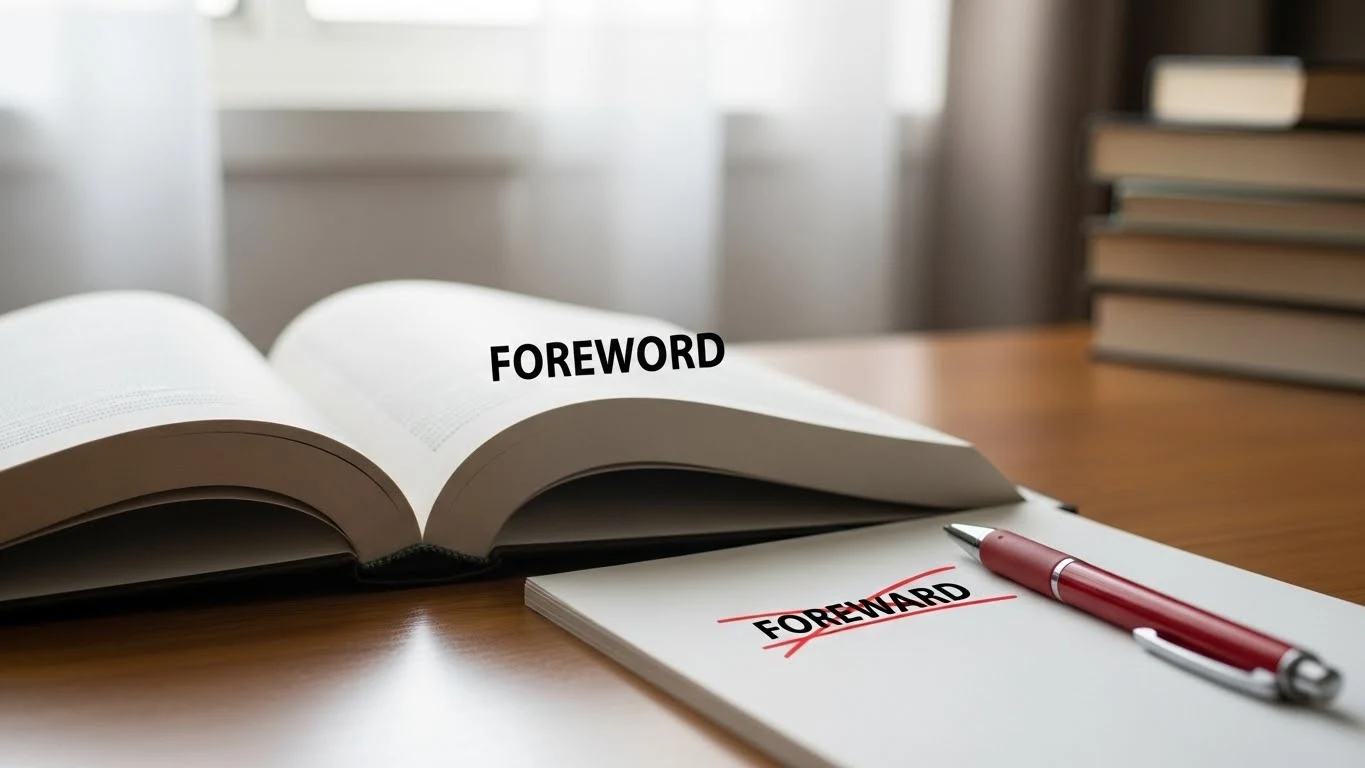
Foreword is the correct word for an introduction to a book, while foreward is a common spelling mistake.
Many people search for “foreward or foreword” because the two words look almost the same and sound identical.
You may have seen foreward written in emails, blogs, or even books and wondered if it is just another spelling of foreword. This confusion is very common, especially for learners of English and new writers.
The confusion happens because English already has words like forward, afterward, and backward. Because of these patterns, many people naturally assume foreward must also be correct. Spellcheck tools sometimes fail to explain the difference, which makes the problem worse.
The truth is simple but important: only one of these spellings is correct. Using the wrong one can make your writing look careless, especially in professional or academic work.
This article clears up the confusion clearly and quickly. You’ll learn the correct spelling, its origin, how British and American English treat it, common mistakes, real-life examples, and expert advice on proper usage.
By the end, you’ll know exactly why “foreword” is correct and “foreward” is not.
Foreward or Foreword ; Quick Answer
Foreword is the correct spelling.
Foreward is incorrect in standard English.
A foreword is a short introduction written at the beginning of a book, usually by someone other than the author.
Examples:
- The book includes a foreword by a famous author.
- She was honored to write the foreword.
❌ Foreward is not a real word when referring to books or introductions.
👉 Short rule:
If you mean the opening section of a book → Foreword (always).
Read more about:Parley or Parlay: Correct Usage Explained
The Origin of Foreward or Foreword
The word foreword comes from Old English roots:
- “fore” meaning before
- “word” meaning speech or text
So, foreword literally means “a word before”, which perfectly describes its purpose: a text that appears before the main content of a book.
Why “foreward” exists as a mistake
The confusion happens because:
- English has the word forward
- English uses -ward in many directions (toward, backward)
- People assume the pattern applies here too
But foreword is not related to direction or movement. It is about words, not motion. That’s why foreward never became a correct spelling.
British English vs American English Spelling
This is one case where British English and American English agree completely.
Key point:
- Foreword is correct in both UK and US English
- Foreward is incorrect in all standard forms of English
Comparison Table
| Term | UK English | US English | Correct? |
| Foreword | ✅ Yes | ✅ Yes | ✅ Correct |
| Foreward | ❌ No | ❌ No | ❌ Incorrect |
👉 There is no spelling variation between regions.
Which Spelling Should You Use?
The answer is very simple.
Always use Foreword if:
- You are writing or editing a book
- You mean an introduction written before the main text
- You want professional, correct English
Example:
The biography opens with a foreword by the editor.
Never use Foreward because:
- It is not a recognized word
- It is considered a spelling error
- It can reduce credibility in formal writing
Global advice:
No matter your audience—US, UK, or international—foreword is the only correct choice.
Common Mistakes with Foreward or Foreword
Here are the most common errors people make:
❌ Mistake 1: Treating foreward as a variant spelling
There is no variant. Foreward is wrong.
❌ Mistake 2: Confusing foreword with forward
- Foreword = book introduction
- Forward = direction or movement
❌ Mistake 3: Using foreward in professional writing
This mistake is very noticeable in books, blogs, and academic content.
✅ Correct usage:
- She wrote the foreword for the novel.
Foreword in Everyday Examples

Emails
- Could you please write the foreword for my book?
News
- The report begins with a foreword from the minister.
Social Media
- Honored to write the foreword for this amazing book!
Formal Writing
- The foreword explains the historical background of the text.
👉 You will never see “foreward” used correctly in these contexts.
Foreword ; Google Trends & Usage Data
Search data shows:
- Foreword is widely searched worldwide
- Foreward is searched mainly due to spelling confusion
- Peaks happen during academic seasons and publishing cycles
Popularity by country:
- US, UK, Canada, Australia → Foreword dominates
- Searches for foreward usually lead to correction pages
User intent:
Most people searching “foreward or foreword” want:
- The correct spelling
- A quick explanation
- Confirmation for writing
This confirms that the confusion is about spelling accuracy, not meaning.
Foreward vs Foreword ; Comparison Table
| Feature | Foreword | Foreward |
| Correct Spelling | ✅ Yes | ❌ No |
| Meaning | Book introduction | None |
| Dictionary Entry | Yes | No |
| UK & US Usage | Standard | Incorrect |
| Professional Writing | Accepted | Error |
FAQs: Foreward or Foreword
1. Is foreward ever correct?
No. It is always incorrect.
2. What is a foreword in a book?
It is a short introduction written before the main text.
3. Is foreword British or American English?
It is used in both British and American English.
4. Why do people write foreward?
Because it looks similar to words like forward and toward.
5. Can spellcheck miss this mistake?
Yes. Some tools don’t clearly explain the difference.
6. Who usually writes a foreword?
Often a guest author, expert, or public figure.
7. Is foreword the same as a preface?
No. A preface is usually written by the author.
Conclusion
The confusion between foreward or foreword is very common, but the solution is clear and simple. Foreword is the only correct spelling.
It refers to an introductory section placed before the main content of a book, usually written by someone other than the author. The spelling foreward may look logical, but it has never been accepted in standard English.
This is not a British vs American issue, and it is not a spelling variation.
It is simply correct vs incorrect. Understanding the origin of the word helps make this clear: foreword means “a word before,” not something related to direction or movement.
By remembering this rule and checking your writing carefully, you can avoid a very visible mistake. Whether you are writing a book, an article, or a professional email, using foreword correctly adds clarity and credibility to your work.

I am James Whitmore. I love clear and honest English. I write to make hard words feel simple. My goal is to help readers write with confidence, without fear or confusion.