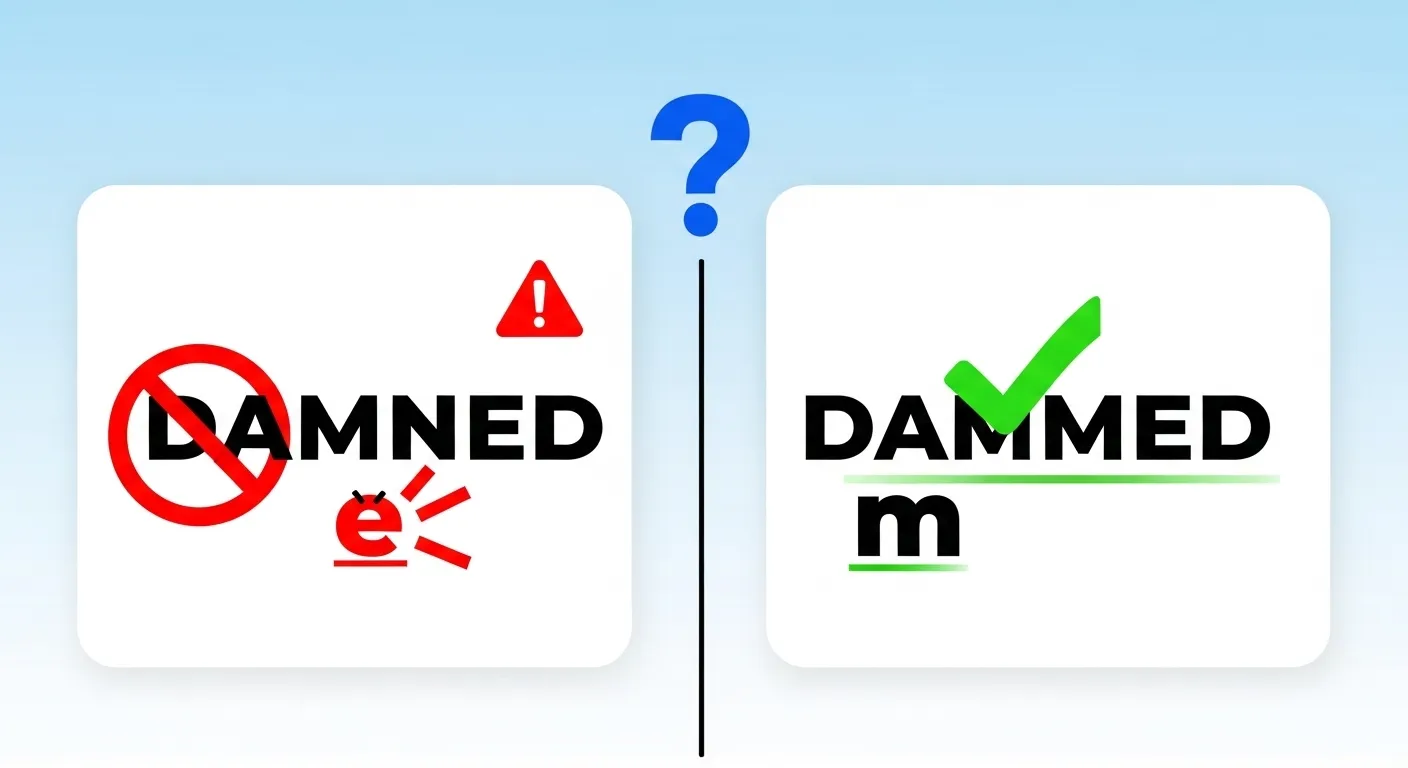
“Dammed” refers to blocking water, while “Damned” refers to being cursed; both are correct depending on context. ✅
Many people search for “dammed or damned” because these two words look very similar but have very different meanings.
One small spelling change can completely change the meaning of a sentence. This confusion is common in writing, emails, social media posts, news articles, and even professional documents.
The problem happens because both words come from different roots, sound almost the same when spoken, and are often typed quickly without checking context.
Spell check tools may not always catch the mistake because both words are real English words. This makes the confusion even worse.
This article solves that problem clearly and simply. You will learn the correct meaning of dammed and damned, where they come from, how British and American English use them, common mistakes to avoid, and real examples from everyday writing. By the end, you will always know which word to use and why.
Dammed or Damned ; Quick Answer
- Dammed → Means blocked or held back, usually by a dam.
- Example: The river was dammed to control flooding.
- Example: The river was dammed to control flooding.
- Damned → Means cursed, condemned, or strongly criticized.
- Example: He felt damned by his past mistakes.
- Example: He felt damned by his past mistakes.
Quick rule:
If it involves water or a barrier, use dammed.
If it involves emotion, religion, or blame, use damned.
The Origin of Dammed or Damned
These two words come from different origins, which explains why they should not be mixed.
- Dammed
- Comes from the noun dam
- Related to water control, rivers, and engineering
- Means stopping or holding something back
- Comes from the noun dam
- Damned
- Comes from Latin damnare, meaning to condemn
- Used in religious, emotional, or dramatic contexts
- Often expresses anger, frustration, or judgment
- Comes from Latin damnare, meaning to condemn
Because they sound alike in speech, people often confuse them in writing.
British English vs American English Spelling
There is no spelling difference between British and American English for these words. Both varieties use the same spellings and meanings.
| Word | British English | American English | Meaning |
| Dammed | ✅ Yes | ✅ Yes | Blocked or held back |
| Damned | ✅ Yes | ✅ Yes | Condemned or cursed |
The confusion is not regional. It is purely about meaning.
Which Spelling Should You Use?
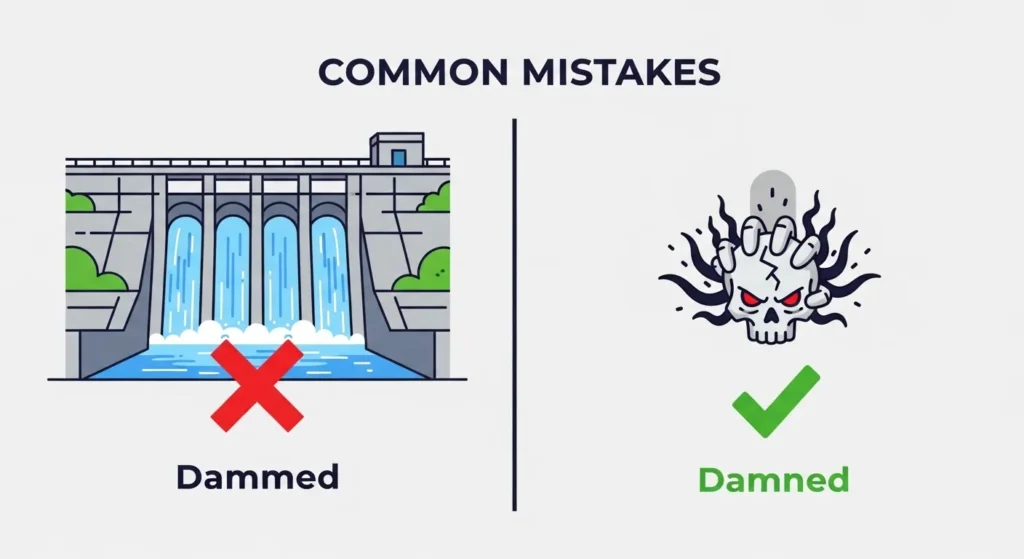
Use the spelling based on meaning, not location.
- Use dammed when talking about:
- Rivers
- Water
- Flood control
- Physical barriers
- Rivers
- Use damned when talking about:
- Emotions
- Religion
- Judgment
- Anger or frustration
- Emotions
This rule works for:
- US audiences
- UK audiences
- Global readers
Common Mistakes with Dammed or Damned
1. Using “dammed” instead of “damned”
❌ I am dammed tired of waiting.
✅ I am damned tired of waiting.
2. Using “damned” for water or rivers
❌ The river was damned to stop flooding.
✅ The river was dammed to stop flooding.
3. Assuming both words mean the same
They do not. One is physical. One is emotional or moral.
Dammed or Damned in Everyday Examples
Emails
- ✅ The river was dammed to protect nearby homes.
- ✅ We are damned if we miss the deadline again.
News
- ✅ The government approved a new dammed reservoir.
- ✅ The project was damned by critics.
Social Media
- ✅ This traffic is damned annoying.
- ❌ This traffic is dammed annoying.
Formal Writing
- ✅ The valley was dammed to support irrigation.
- ✅ The policy was damned by public opinion.
Dammed or Damned ; Google Trends & Usage Data
Search data shows:
- Damned is searched more in emotional, literary, and casual contexts
- Dammed appears mostly in environmental and construction topics
- Confusion searches like “dammed or damned” are common worldwide
| Term | Search Context | Usage Type |
| Dammed | Engineering, rivers | Technical |
| Damned | Emotion, opinion | Expressive |
Comparison Table: Keyword Variations
| Word | Correct | Meaning | Example |
| Dammed | ✅ Yes | Blocked by a dam | The river was dammed. |
| Damned | ✅ Yes | Condemned or cursed | He felt damned. |
FAQs
1. Are dammed and damned the same?
No. They have different meanings and uses.
2. Which word is more common?
Damned is more common in everyday language.
3. Can “damned” be used casually?
Yes. It is often used for emphasis.
4. Is “damned” offensive?
It can be strong language in some contexts, so use carefully.
5. Is “dammed” only about water?
Mostly yes. It refers to physical blocking.
6. Can spell check catch this mistake?
Not always, because both words are real.
7. How can I remember the difference?
Think dam = water → dammed.
Conclusion
The difference between dammed or damned is simple once you focus on meaning. Dammed is about blocking water or creating barriers, while damned is about judgment, emotion, or condemnation. They sound alike, but they do not mean the same thing.
Using the wrong word can confuse readers or change the meaning of a sentence. That is why it is important to pause and think about context before choosing the spelling. Remembering this simple rule will keep your writing clear, correct, and professional.
Read more about !
Davises or Davis’s: Which One Is Correct? 🤔✍️

Hye ! I am Henry P. Whitmore i am English writer known for my clear and practical approach to English grammar, word usage, and language clarity. I focuses on helping learners, writers, and professionals understand confusing English terms in a simple way. My work is especially useful for people who struggle with spelling differences, word meanings, and correct usage in everyday writing